Source: Future Market Insights Global and Consulting Pvt. Ltd.
Global Antimicrobial Polymer Films Market Poised to Reach USD 1,851.9 Million by 2034 Amid Rising Demand for Food Safety and Advanced Packaging Solutions | FMI
France’s commitment to sustainability, food preservation, and health awareness is driving the growth of the antimicrobial polymer films market. With a focus on reducing food waste, stricter regulations, and innovation in biodegradable solutions, France is poised to lead in the adoption of advanced antimicrobial packaging.
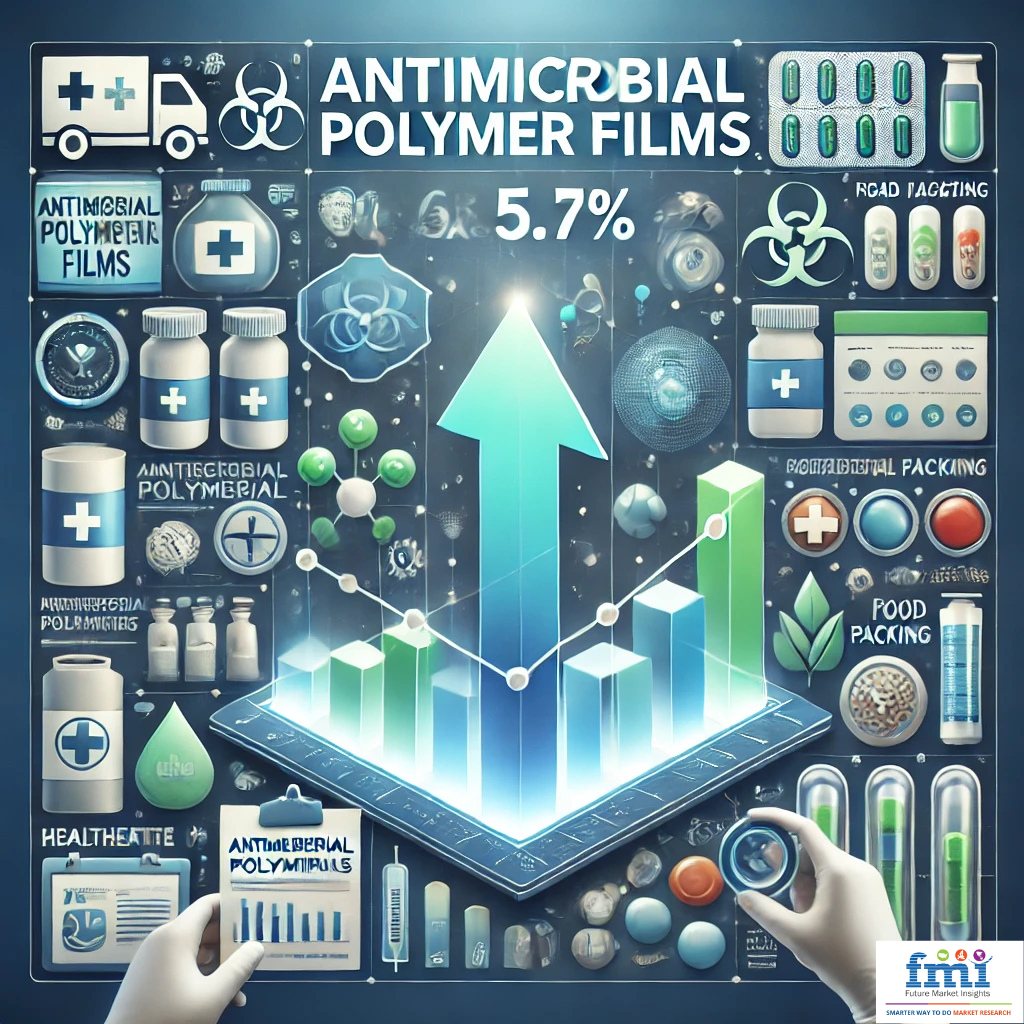
NEWARK, Del, Dec. 05, 2024 (GLOBE NEWSWIRE) -- The global antimicrobial polymer films market is projected to grow at a robust CAGR of 5.7% between 2024 and 2034, rising from USD 1,063.8 million in 2024 to USD 1,851.9 million by 2034. This growth is fueled by increasing demand for food safety, shelf-life enhancement, infection control measures, and innovations in antimicrobial materials. The market exhibited a revenue of USD 1,031.4 million in 2023, with a year-over-year growth of 2.7% in 2024.
The global antimicrobial polymer films market is witnessing unprecedented demand driven by heightened awareness of hygiene and infection control, especially in the healthcare, food packaging, and consumer goods industries. The increasing focus on preventing microbial contamination in critical environments has propelled these films into the spotlight as essential materials. With consumers and industries alike prioritizing safety, antimicrobial polymer films are becoming indispensable in applications ranging from medical device coatings to food packaging, where they effectively inhibit the growth of bacteria, fungi, and viruses.
Request Sample Report and Drive Impactful Decisions: https://www.fmisamplereport.com/sample/rep-gb-19896
Innovation remains at the heart of this market's rapid evolution. Leading manufacturers are developing advanced formulations that integrate eco-friendly and biodegradable components without compromising efficacy. The incorporation of silver ions, zinc oxide, and chitosan-based solutions has enhanced the functionality and performance of antimicrobial films. Additionally, the integration of nanotechnology is enabling the development of ultra-thin, durable, and highly efficient films that cater to the growing demand for sustainable packaging.
Looking ahead, the antimicrobial polymer films market is poised for robust growth, with projections indicating a significant CAGR over the next decade. Emerging economies in Asia-Pacific and Latin America are expected to drive the expansion, fueled by rising urbanization, increased disposable incomes, and stricter regulatory standards on food safety and medical hygiene. Meanwhile, the rise of e-commerce is creating new opportunities for antimicrobial films in secondary and tertiary packaging to ensure product integrity during transit.
The future of this market lies in continued innovation and the adoption of smart antimicrobial technologies, such as films that respond dynamically to microbial presence. As industries strive to meet evolving consumer expectations for cleanliness and sustainability, antimicrobial polymer films are set to play a pivotal role in shaping the next generation of protective solutions.
Key Takeaways on the Global Antimicrobial Polymer Films Industry:
- Market Growth Projection: The global antimicrobial polymer films market is poised to grow at a robust CAGR of 5.7% from 2024 to 2034, reflecting increasing demand for hygienic and protective solutions.
- Current and Future Market Valuation: Valued at USD 1,031.4 million in 2023, the market is expected to reach an impressive USD 1,851.9 million by the end of 2034.
- Regional Performance: South Asia and Pacific region is projected to exhibit the fastest growth with a CAGR of 6.9% during the forecast period, driven by rising industrial and consumer applications.
- Industry Leaders: Prominent players shaping the market include Addmaster (UK) Ltd, Dow Inc., Microban International, Sciessent, and PolyOne Corporation (Avient).
- Demand Drivers: Growing awareness regarding antimicrobial protection in healthcare, packaging, and consumer goods is fueling industry expansion.
- Strategic Opportunities: The industry’s growth potential is amplified by advancements in polymer technology and increasing adoption in emerging markets.
Key Market Insights
- Food Packaging Dominates Market Share: Food packaging is set to account for over 35% of the market share in 2024, driven by the global food industry's need to combat spoilage and contamination. Antimicrobial polymer films have become indispensable in ensuring product freshness and safety, aligning with stringent food safety regulations worldwide.
- Rising Demand from Quick Commerce and Online Grocery Deliveries: The surge in quick commerce and online grocery delivery services has further propelled the adoption of antimicrobial polymer films, which protect food products during transit, even over extended periods.
- Synthetic Polymers Lead Material Segment: Synthetic polymers, including polyethylene, polypropylene, and polyethylene terephthalate, dominate the material segment with 70% of the market share. These materials are widely available, cost-effective, and integrate seamlessly with metal-based antimicrobial agents like silver and copper, enhancing their effectiveness across multiple industries.
Driving Factors
- Food Safety and Shelf-Life Extension
The antimicrobial properties of these films inhibit the growth of bacteria, fungi, and mold, making them essential for preserving delicate food products like dairy, seafood, and ready-to-eat food. Growing public awareness of foodborne illnesses and regulatory mandates from organizations like the FDA and EFSA are spurring demand. - Infection Control in Healthcare
Infection control measures in healthcare are driving the adoption of antimicrobial polymer films for applications such as wound dressings, medical device packaging, and sterilization wraps. The pandemic further emphasized the importance of these films, which help reduce infection risks and improve patient safety. - Advances in Natural Antimicrobial Materials
Innovations in natural antimicrobial materials, such as chitosan, offer promising alternatives to traditional plastic polymers. Chitosan’s microbial, non-toxic, and biocompatible properties have attracted significant attention for food and healthcare applications.
Key Industry Applications
- Food & Beverage Industry
Antimicrobial films are critical in packaging to ensure product safety and extend shelf life, especially for high-risk items like seafood and fresh produce. - Healthcare Sector
The films’ ability to prevent bacterial growth supports their use in packaging medical devices and creating sterile environments, aligning with stringent infection control standards. - Quick Commerce and E-Commerce
The growing trend of online grocery and meal kit delivery has amplified the need for protective, antimicrobial packaging to meet consumer expectations for freshness and safety.
“The rising demand for antimicrobial polymer films driven by the need for food safety, infection control, and shelf-life extension across industries. Innovations in materials like chitosan and synthetic polymers enhance product efficacy, while quick commerce and healthcare applications further accelerate market growth potential.” Says a Lead Consultant Ismail Sutaria in Packaging at Future Market Insights (FMI).
Innovations in the Antimicrobial Polymer Films Market:
- Nanotechnology Integration: Incorporating nano-scale materials to enhance antimicrobial efficacy and durability in polymer films.
- Biodegradable Options: Development of eco-friendly antimicrobial films made from sustainable, biodegradable polymers.
- Smart Packaging: Introduction of films with responsive antimicrobial properties that activate when microbial contamination is detected.
- Advanced Coating Techniques: Use of advanced coatings like silver, zinc oxide, and chitosan to improve film performance and longevity.
- Customizable Film Thickness: Innovation in creating customizable film thicknesses to meet specific needs in food and medical packaging applications.
Growth Opportunities:
- Rising Demand in Food Packaging: Increased need for antimicrobial films to extend the shelf life of perishable food products.
- Expansion in Emerging Markets: Growing markets in Asia-Pacific, particularly India and China, due to booming food and healthcare industries.
- Increased Adoption in Healthcare: Surge in demand for antimicrobial films for sterile medical equipment, surgical instruments packaging, and pharmaceuticals.
- E-commerce Growth: The rise in online shopping creates a need for protective antimicrobial packaging solutions for products during transit.
- Sustainability Regulations: Stricter environmental and food safety regulations globally, encouraging the adoption of antimicrobial packaging solutions.
Unlock Comprehensive Market Insights – Explore the Full Report Now: https://www.futuremarketinsights.com/reports/antimicrobial-polymer-films-market
Country-wise Insights
| Country | CAGR (2024-2034) | Description | |
| USA | 4.2 | % | Moderate growth driven by demand in healthcare and food packaging. Focus on innovation and compliance with stringent safety standards. |
| Germany | 4.3 | % | Growth fueled by advancements in sustainable packaging and high demand for protective films in healthcare and food sectors. |
| UK | 4.6 | % | Rising consumer awareness of hygiene and sustainability drives demand for antimicrobial solutions in various applications. |
| France | 5.1 | % | Leadership in Western Europe due to green initiatives, regulations on reducing food waste, and demand for packaging that supports organic and minimally processed foods. |
| India | 7.1 | % | Rapid growth fueled by the expansion of the food processing and pharmaceutical industries, coupled with rising e-commerce and urbanization. |
| China | 6.3 | % | Significant market growth owing to industrial advancements and increasing adoption of antimicrobial films in healthcare and food packaging. |
| Japan | 5.9 | % | Driven by technological innovation and focus on high-quality, protective packaging solutions for aging populations and niche industries. |
| GCC Countries | 5.5 | % | Growth supported by increased investments in healthcare and food safety initiatives in a region undergoing rapid modernization. |
| Canada | 5.3 | % | Moderate growth as demand increases for antimicrobial films in healthcare and food packaging, aligned with stringent safety regulations. |
Key Players of Antimicrobial Polymer Films Industry
- Alta Max LLC
- Addmaster (UK) Ltd
- Dow Inc.
- Microban International
- Sciessent
- PolyOne Corporation (Avient)
- Sanitized AG
- Ampacet Corporation
- BioCote Ltd
- Parx Materials NV
- Tredegar Corporation
- Plastics Color Corporation
- Yixing Cleanwater Chemicals Co., Ltd.
- Kitozyme, LLC
- Mujō
- AlgiPack
- Thermofischer Scientific
- Dunmore Aerospace
- Hubei Firsta Material Science and Technology Group Co.,
- Silver Polycoat Industries
- Filiriko
- Mauser Packaging Solutions
Key Segments
By Material:
In terms of material, the industry has been divided into natural polymers, synthetic polymers, and biodegradable polymers. Natural polymers have been further sub-segmented into chitosan-based films, alginate-based films, and gelatin-based films.
Synthetic polymers have been further sub-segmented into polyethylene (PE), polypropylene (PP), polyethylene terephthalate (PET), polyvinyl chloride (PVC), and others (PU, PS). Biodegradable polymers have been further sub-segmented into polylactic acid (PLA), and polyhydroxyalkanoates (PHA).
By Antimicrobial Agent:
In terms of antimicrobial agent, the industry has been segregated into metal-based agents, organic agents, quaternary ammonium compounds (QACs), chitosan and derivatives, and others. Metal-based agents have been further sub-segmented into silver, copper, and zinc oxide.
Organic agents have been further sub-segmented into essential oils, and enzymes. The others segment has been further sub-segmented into biguanides, and halogenated agents.
By Application:
By application, the industry has been classified into food packaging, healthcare & medical, industrial, consumer goods, and others. The food-packaging segment has been sub-segmented into fresh produce, meat, poultry, and seafood, bakery products, dairy products, and ready-to-eat foods.
The healthcare and medical segment has been further sub-segmented into wound dressings, surgical drapes, medical device packaging, and pharmaceutical packaging. The industrial segment has been further sub-segmented into protective films for equipment, and electronics packaging.
The consumer goods segment has been further sub-segmented into hygiene products, personal care products. The others segment has been further sub-segmented into agricultural films, and building and construction.
By Thickness:
By Thickness, the Industry has been divided into up to 50 microns, 50-100 microns, and above 100 microns.
By Region:
Key countries of North America, Latin America, Western Europe, Eastern Europe, South Asia & Pacific, East Asia, and Middle East and Africa (MEA), have been covered in the report.
French Translation:
Le marché mondial des films polymères antimicrobiens devrait croître à un TCAC robuste de 5,7 % entre 2024 et 2034, passant de 1 063,8 millions USD en 2024 à 1 851,9 millions USD en 2034. Cette croissance est alimentée par la demande croissante de sécurité alimentaire, d'amélioration de la durée de conservation, de mesures de contrôle des infections et d'innovations dans les matériaux antimicrobiens. Le marché a affiché un chiffre d'affaires de 1 031,4 millions USD en 2023, avec une croissance annuelle de 2,7 % en 2024.
Le marché mondial des films polymères antimicrobiens connaît une demande sans précédent, alimentée par une sensibilisation accrue à l'hygiène et au contrôle des infections, en particulier dans les secteurs de la santé, de l'emballage alimentaire et des biens de consommation. L'accent croissant mis sur la prévention de la contamination microbienne dans les environnements critiques a propulsé ces films sur le devant de la scène en tant que matériaux essentiels. Les consommateurs et les industries accordant la priorité à la sécurité, les films polymères antimicrobiens deviennent indispensables dans des applications allant des revêtements de dispositifs médicaux aux emballages alimentaires, où ils inhibent efficacement la croissance des bactéries, des champignons et des virus.
L'innovation reste au cœur de l'évolution rapide de ce marché. Les principaux fabricants développent des formulations avancées qui intègrent des composants écologiques et biodégradables sans compromettre l'efficacité. L'incorporation d'ions argent, d'oxyde de zinc et de solutions à base de chitosane a amélioré la fonctionnalité et les performances des films antimicrobiens. De plus, l'intégration de la nanotechnologie permet le développement de films ultra-minces, durables et hautement efficaces qui répondent à la demande croissante d' emballages durables .
Le marché des films polymères antimicrobiens devrait connaître une croissance robuste à l’avenir, les projections indiquant un TCAC important au cours de la prochaine décennie. Les économies émergentes d’Asie-Pacifique et d’Amérique latine devraient stimuler cette expansion, alimentée par l’urbanisation croissante, l’augmentation des revenus disponibles et des normes réglementaires plus strictes en matière de sécurité alimentaire et d’hygiène médicale. Parallèlement, l’essor du commerce électronique crée de nouvelles opportunités pour les films antimicrobiens dans les emballages secondaires et tertiaires afin de garantir l’intégrité des produits pendant le transport.
L’avenir de ce marché repose sur l’innovation continue et l’adoption de technologies antimicrobiennes intelligentes, telles que les films qui réagissent de manière dynamique à la présence microbienne. Alors que les industries s’efforcent de répondre aux attentes changeantes des consommateurs en matière de propreté et de durabilité, les films polymères antimicrobiens sont appelés à jouer un rôle essentiel dans la définition de la prochaine génération de solutions de protection.
Principaux points à retenir sur l’industrie mondiale des films polymères antimicrobiens :
- Projection de croissance du marché : Le marché mondial des films polymères antimicrobiens devrait croître à un TCAC robuste de 5,7 % de 2024 à 2034, reflétant la demande croissante de solutions hygiéniques et protectrices.
- Évaluation actuelle et future du marché : Évalué à 1 031,4 millions USD en 2023, le marché devrait atteindre un impressionnant 1 851,9 millions USD d'ici la fin de 2034.
- Performance régionale : La région Asie du Sud et Pacifique devrait connaître la croissance la plus rapide avec un TCAC de 6,9 % au cours de la période de prévision, tirée par l'augmentation des applications industrielles et grand public.
- Leaders de l'industrie : les principaux acteurs qui façonnent le marché comprennent Addmaster (UK) Ltd, Dow Inc., Microban International, Sciessent et PolyOne Corporation (Avient).
- Facteurs de la demande : La sensibilisation croissante à la protection antimicrobienne dans les soins de santé, les emballages et les biens de consommation alimente l’expansion du secteur.
- Opportunités stratégiques : Le potentiel de croissance de l’industrie est amplifié par les progrès de la technologie des polymères et leur adoption croissante sur les marchés émergents.
Informations clés sur le marché
- Les emballages alimentaires dominent le marché : Les emballages alimentaires devraient représenter plus de 35 % des parts de marché en 2024, en raison de la nécessité pour l'industrie alimentaire mondiale de lutter contre la détérioration et la contamination. Les films polymères antimicrobiens sont devenus indispensables pour garantir la fraîcheur et la sécurité des produits, conformément aux réglementations strictes en matière de sécurité alimentaire dans le monde entier.
- Demande croissante de services de commerce rapide et de livraison de produits d’épicerie en ligne : L’essor du commerce rapide et des services de livraison de produits d’épicerie en ligne a encore propulsé l’adoption de films polymères antimicrobiens, qui protègent les produits alimentaires pendant le transport, même sur des périodes prolongées.
- Les polymères synthétiques dominent le segment des matériaux : les polymères synthétiques, notamment le polyéthylène, le polypropylène et le polyéthylène téréphtalate, dominent le segment des matériaux avec 70 % des parts de marché. Ces matériaux sont largement disponibles, rentables et s'intègrent parfaitement aux agents antimicrobiens à base de métal comme l'argent et le cuivre, améliorant ainsi leur efficacité dans de nombreux secteurs.
Facteurs déterminants
- Sécurité alimentaire et prolongation de la durée de conservation
Les propriétés antimicrobiennes de ces films inhibent la croissance des bactéries, des champignons et des moisissures, ce qui les rend essentiels pour la conservation des produits alimentaires délicats comme les produits laitiers, les fruits de mer et les aliments prêts à consommer . La sensibilisation croissante du public aux maladies d'origine alimentaire et les mandats réglementaires d'organisations comme la FDA et l'EFSA stimulent la demande. - Contrôle des infections dans le secteur de la santé
Les mesures de contrôle des infections dans le secteur de la santé favorisent l'adoption de films polymères antimicrobiens pour des applications telles que les pansements, les emballages de dispositifs médicaux et les emballages de stérilisation. La pandémie a encore souligné l'importance de ces films, qui contribuent à réduire les risques d'infection et à améliorer la sécurité des patients. - Progrès dans les matériaux antimicrobiens naturels
Les innovations dans le domaine des matériaux antimicrobiens naturels, tels que le chitosane, offrent des alternatives prometteuses aux polymères plastiques traditionnels. Les propriétés microbiennes, non toxiques et biocompatibles du chitosane ont suscité une attention considérable pour les applications alimentaires et médicales.
Applications industrielles clés
- Industrie alimentaire et des boissons
Les films antimicrobiens sont essentiels dans les emballages pour garantir la sécurité des produits et prolonger la durée de conservation, en particulier pour les articles à haut risque comme les fruits de mer et les produits frais. - Secteur de la santé
La capacité des films à empêcher la croissance bactérienne soutient leur utilisation dans l'emballage de dispositifs médicaux et la création d'environnements stériles, conformément aux normes strictes de contrôle des infections. - Commerce rapide et commerce électronique
La tendance croissante de la livraison en ligne de produits d'épicerie et de kits de repas a amplifié le besoin d'emballages protecteurs et antimicrobiens pour répondre aux attentes des consommateurs en matière de fraîcheur et de sécurité.
« La demande croissante de films polymères antimicrobiens est motivée par le besoin de sécurité alimentaire, de contrôle des infections et de prolongation de la durée de conservation dans tous les secteurs. Les innovations dans les matériaux comme le chitosane et les polymères synthétiques améliorent l'efficacité des produits, tandis que les applications commerciales rapides et de santé accélèrent encore le potentiel de croissance du marché », déclare Ismail Sutaria , consultant principal en emballage chez Future Market Insights (FMI) .
Innovations sur le marché des films polymères antimicrobiens :
- Intégration de la nanotechnologie : intégration de matériaux à l’échelle nanométrique pour améliorer l’efficacité antimicrobienne et la durabilité des films polymères.
- Options biodégradables : Développement de films antimicrobiens respectueux de l’environnement fabriqués à partir de polymères durables et biodégradables.
- Emballage intelligent : Introduction de films aux propriétés antimicrobiennes réactives qui s'activent lorsqu'une contamination microbienne est détectée.
- Techniques de revêtement avancées : utilisation de revêtements avancés comme l’argent, l’oxyde de zinc et le chitosane pour améliorer les performances et la longévité du film.
- Épaisseur de film personnalisable : Innovation dans la création d'épaisseurs de film personnalisables pour répondre à des besoins spécifiques en matière d'emballage alimentaire et médical
Opportunités de croissance :
- Demande croissante en matière d’emballage alimentaire : besoin accru de films antimicrobiens pour prolonger la durée de conservation des produits alimentaires périssables.
- Expansion sur les marchés émergents : Marchés en croissance en Asie-Pacifique, notamment en Inde et en Chine, en raison de l’essor des secteurs de l’alimentation et de la santé.
- Adoption accrue dans le secteur de la santé : augmentation de la demande de films antimicrobiens pour les équipements médicaux stériles, l’emballage des instruments chirurgicaux et les produits pharmaceutiques.
- Croissance du commerce électronique : L’essor des achats en ligne crée un besoin de solutions d’emballage antimicrobiennes de protection pour les produits pendant le transport.
- Réglementations en matière de développement durable : Réglementations environnementales et de sécurité alimentaire plus strictes à l’échelle mondiale, encourageant l’adoption de solutions d’emballage antimicrobiennes.
Principaux acteurs de l'industrie des films polymères antimicrobiens
- Alta Max LLC
- Addmaster (Royaume-Uni) Ltd
- Dow Inc.
- Microban International
- Scientifique
- Société PolyOne (Avient)
- AG assainie
- Société Ampacet
- BioCote Ltée
- Matériaux Parx NV
- Société Tredegar
- Société de couleurs plastiques
- Yixing Cleanwater Chemicals Co., Ltd.
- Kitozyme, LLC
- Mujo
- AlgiPack
- Thermofischer Scientific
- Dunmore Aérospatiale
- Groupe de science et de technologie des matériaux Hubei Firsta Co., Ltd.
- Industries de revêtements en argent
- Filiriko
- Solutions d'emballage Mauser
Segments clés
Par matériau :
En termes de matériaux, l'industrie a été divisée en polymères naturels, polymères synthétiques et polymères biodégradables. Les polymères naturels ont été subdivisés en films à base de chitosane, films à base d'alginate et films à base de gélatine.
Les polymères synthétiques ont été subdivisés en polyéthylène (PE), polypropylène (PP), polyéthylène téréphtalate (PET), polychlorure de vinyle (PVC) et autres (PU, PS). Les polymères biodégradables ont été subdivisés en acide polylactique (PLA) et polyhydroxyalcanoates (PHA).
Par agent antimicrobien :
En ce qui concerne les agents antimicrobiens, l'industrie a été divisée en agents à base de métaux, agents organiques, composés d'ammonium quaternaire (QAC), chitosane et dérivés, et autres. Les agents à base de métaux ont été subdivisés en oxydes d'argent, de cuivre et de zinc.
Les agents organiques ont été subdivisés en huiles essentielles et en enzymes. Les autres segments ont été subdivisés en biguanides et en agents halogénés.
Par application :
En fonction de l'application, l'industrie a été classée en emballage alimentaire, soins de santé et médicaux, industrie, biens de consommation et autres. Le segment de l'emballage alimentaire a été sous-segmenté en produits frais, viande, volaille et fruits de mer, produits de boulangerie, produits laitiers et aliments prêts à consommer.
Le secteur médical et de la santé a été subdivisé en pansements, champs chirurgicaux, emballages de dispositifs médicaux et emballages pharmaceutiques. Le secteur industriel a été subdivisé en films de protection pour équipements et emballages électroniques.
Le segment des biens de consommation a été subdivisé en produits d'hygiène et produits de soins personnels. Les autres segments ont été subdivisés en films agricoles et en produits du bâtiment et de la construction.
Par épaisseur :
En termes d'épaisseur, l'industrie a été divisée en jusqu'à 50 microns, 50-100 microns et plus de 100 microns.
Par région :
Les principaux pays d’Amérique du Nord, d’Amérique latine, d’Europe occidentale, d’Europe de l’Est, d’Asie du Sud et du Pacifique, d’Asie de l’Est, du Moyen-Orient et d’Afrique (MEA) ont été couverts dans le rapport.
Authored by:
Ismail Sutaria (Lead Consultant, Packaging and Materials) has over 8 years of experience in market research and consulting in the packaging & materials industry. Ismail’s strength lies in identifying key challenges faced by the client and offering logical and actionable insights to equip the clients with strategic decision-making power.
Ismail has been an instrumental part of several transformational consulting assignments. His key skills include competitive benchmarking, opportunity assessment, macroeconomic analysis, and business transformation advisory. Ismail is an MBA holder in Marketing and has a Bachelor’s Degree in Mathematics.
Have a Look at Trending Research Reports on Packaging Domain:
The global easy peel film packaging market demand is anticipated to grow at a CAGR of 2.9% during the assessment period and reach a value of USD 2.5 billion by 2034.
The Recyclable Plastic Films Market growth is expected to rise to USD 39,785.0 million by 2033. The sales of recyclable plastic films are expected to record a significant CAGR of 5.1% during the forecast period.
The global sales cold seal plastic films Market are anticipated to reach a value of USD 5.9 billion by 2031. Sales are projected to rise at a CAGR of 5.8% over the forecast period between 2021 and 2031.
The global timber wrap films industry is projected to register a CAGR of 4.3% during the forecast period. Further, this report predicts the overall valuation of the market to reach up to USD 714.2 million by the end of 2033.
Worldwide demand of breathable films is projected to increase at a CAGR of 3.8% and reach a valuation of USD 4.2 billion by the year 2033.
The edible films and coatings market size is likely to surpass USD 4,871.0 million by 2033 at a CAGR of 8.2% during the forecast period.
The biodegradable film market is is predicted to hit USD 1,880.7 million from 2024 to 2034, with a CAGR of 4.1%.
The global bundling machine market size is anticipated to reach a value of USD 5,721.3 million by 2034. Sales revenue of bundling machines industry is projected to rise at a CAGR of 3.4% over the forecast period.
The global Shrink Bundling Film Market sales is expected to drive its value to USD 2.0 billion by 2034. With an anticipated CAGR of 2.8%.
The global electron high barrier packaging film market is projected to accumulate a valuation of USD 44 billion by exhibiting a CAGR of 5.6 % in the forecast period 2023 to 2033.
The High Barrier Lidding Film Market is expected to thrive at a CAGR of 4.6% during the projected period, reaching a value of USD 4.1 billion due to its outstanding performance, low weight, attractive packaging, and attractiveness.
About Future Market Insights (FMI)
Future Market Insights, Inc. (ESOMAR certified, recipient of the Stevie Award, and a member of the Greater New York Chamber of Commerce) offers profound insights into the driving factors that are boosting demand in the market. FMI stands as the leading global provider of market intelligence, advisory services, consulting, and events for the Packaging, Food and Beverage, Consumer, Technology, Healthcare, Industrial, and Chemicals markets. With a vast team of over 400 analysts worldwide, FMI provides global, regional, and local expertise on diverse domains and industry trends across more than 110 countries.
Join us as we commemorate 10 years of delivering trusted market insights. Reflecting on a decade of achievements, we continue to lead with integrity, innovation, and expertise.
Contact Us:
Future Market Insights Inc.
Christiana Corporate, 200 Continental Drive,
Suite 401, Newark, Delaware - 19713, USA
T: +1-347-918-3531
For Sales Enquiries: sales@futuremarketinsights.com
Website: https://www.futuremarketinsights.com
LinkedIn| Twitter| Blogs | YouTube
